
Can You Get a Massage While Pregnant? What to Know About Prenatal Massage

If you’ve been wondering, can you get a massage while pregnant? the short answer is: yes, prenatal massage is generally safe for many pregnant women after the first trimester — when provided by a trained massage therapist and with approval from your healthcare provider when needed.
At Resonance Hot Yoga + Massage, prenatal massage is designed to support the changing needs of the pregnant body with thoughtful care, mindful positioning, and pressure adjustments that prioritize both comfort and safety.
Pregnancy can bring beautiful changes, but it can also come with very real physical discomforts: back pain, muscle tension, swollen feet, disrupted sleep, stress, and the feeling that your body is working overtime. A good pregnancy massage can offer relief, support your well-being, and create space to rest and reconnect.
What Is Prenatal Massage?
Prenatal massage is a form of massage therapy designed specifically for pregnant women. It uses techniques and positioning that account for the physical changes of pregnancy, rather than treating the body like it would during a standard massage session.
At Resonance, prenatal massage is a nurturing full-body treatment that helps relieve aches, reduce stress, and support relaxation during pregnancy. Sessions are adapted throughout pregnancy and shaped around each person’s comfort, symptoms, and stage of care.
Unlike some forms of deep tissue massage, prenatal massage typically uses light to medium pressure, with special attention to comfort, circulation, and areas of tension like the back, neck, hips, and legs.
Is Prenatal Massage Safe?
For many expecting mothers, prenatal massage is safe after the first trimester. At Resonance, our prenatal page specifically notes that this service is suitable for most moms-to-be after the first trimester.
That said, pregnancy is never one-size-fits-all.
It’s important to consult your healthcare provider, OB-GYN, or midwife before booking if you have:
A high risk pregnancy
A history of blood clots
Bleeding
Pre-term contractions
Diabetes or other pregnancy complications
Questions about whether massage is appropriate for your prenatal care plan
Massage is not meant to replace medical care. It is a supportive wellness service that can complement prenatal care when approached thoughtfully and safely.
Why Many Practitioners Wait Until the Second Trimester
You may have heard different things about early pregnancy and massage. Some practitioners say prenatal massage can begin at any stage, while others prefer to avoid massage during the first trimester.
At Resonance, the guidance is clear: prenatal massage is recommended after the first trimester.
This is a common approach in prenatal care settings. It helps ensure that massage begins at a stage when many women feel more stable and more physically ready for this type of support.
If you are in your second trimester or third trimester and looking for relief, prenatal massage can be a meaningful way to support comfort, relaxation, and overall health.
What Are the Benefits of Prenatal Massage?

There are many potential benefits of prenatal massage, especially when the body is adjusting to rapid physical and hormonal change.
Prenatal massage may help support:
Relief from muscle tension
Reduced stress and anxiety
Better sleep quality
Relief from back, hip, and leg discomfort
A calmer nervous system
Improved circulation and blood flow
A greater sense of comfort in the pregnant body
Support for swollen feet and fluid retention
Relief from everyday pregnancy aches
At Resonance, prenatal massage is intended to provide both physical relief and emotional support — an invitation to rest, breathe, and feel cared for during an important season of life.
Can Prenatal Massage Help with Swollen Feet and Circulation?
It can often help.
As pregnancy progresses, blood volume increases, posture changes, and fluid retention may become more noticeable. Some pregnant people experience swelling in the feet, ankles, or legs, especially later in the day or in the third trimester.
Massage therapy may help support improving circulation, comfort, and gentle movement of fluid through the body. It may also help ease the heavy, tired feeling that can come with long days on your feet.
If you are experiencing significant swelling, pain, or anything unusual, it’s important to check with your healthcare provider before booking.
Can Prenatal Massage Help with Stress and Mental Health?
Pregnancy affects more than the body. It can also have a major impact on mental health, sleep, mood, and stress levels.
Supportive touch can help many people feel more grounded, calm, and connected during pregnancy. Prenatal massage may help reduce stress, support relaxation, and offer a break from the mental and physical demands of daily life.
At Resonance, we see massage not just as a treatment for discomfort, but as part of caring for the whole person — body, mind, and overall well-being.
What Position Do You Lie In During a Prenatal Massage?
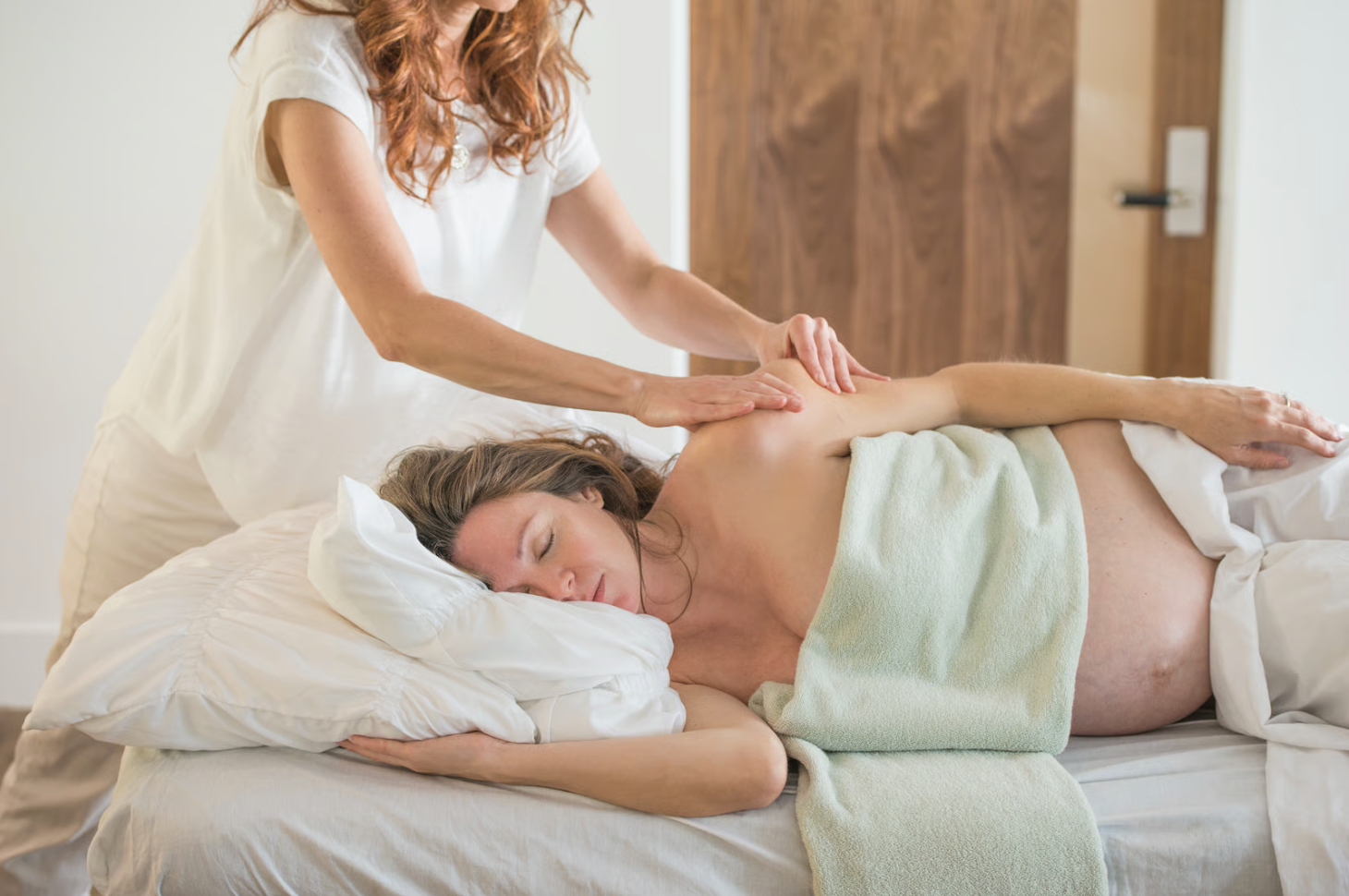
One of the most important differences in pregnancy massage is positioning.
At Resonance, pregnant clients may lie on their side with the support of pillows, and therapists avoid having clients lie flat on their back during the second half of pregnancy. This side-lying setup is designed to support safety, comfort, and ease throughout the session.
You’ll also be covered with sheets and a blanket, and you can choose how much you wish to undress. The session is designed to feel comfortable, respectful, and supportive from start to finish.
What Techniques Are Used in Prenatal Massage?
Prenatal massage often includes gentle, supportive massage techniques rather than aggressive or highly intense work.
A session may include elements similar to Swedish massage, such as long, gliding strokes to promote relaxation and help relieve tension. Some practitioners use kneading techniques to support circulation and ease tight muscles, while still keeping pressure appropriate for pregnancy.
At Resonance, pressure is generally kept to light pressure or medium pressure, rather than very deep pressure. The goal is to provide effective relief while keeping the session safe, calming, and comfortable.
Are There Any Areas or Techniques to Avoid?
Yes. Prenatal massage should be adapted carefully.
In general:
Deep abdominal work should be avoided
Deep pressure on the legs may not be appropriate in some cases
Pressure should always be adjusted for comfort and safety
Some conditions require extra caution or provider approval
This is one reason it matters to book with a professional massage therapist who is trained in prenatal care and who takes time for a thorough intake.
At Resonance, prenatal massage includes a full intake and discussion of any areas to avoid.
What If You Have a High-Risk Pregnancy?
If you have a high risk or medically complicated pregnancy, do not assume massage is automatically appropriate.
Talk with your OB-GYN, midwife, or other healthcare provider first — especially if you have:
High blood pressure
Bleeding
A history of blood clots
Pre-term contractions
Gestational diabetes
Other pregnancy complications
Your provider can help you decide whether prenatal massage is a safe part of your care plan.
What Should You Expect at a Prenatal Massage Appointment?
At Resonance, prenatal massage is designed to feel calm, personal, and supportive.
Before the session, you’ll complete an intake form and discuss your needs with your therapist. If there are certain areas of discomfort, questions, or concerns, those can be addressed before the massage begins.
Sessions are offered in 60- or 90-minute lengths, and prenatal clients are asked to book only with Mike Shick.
The massage itself is shaped around your comfort, your stage of pregnancy, and the kinds of support your body needs that day.
So, Can You Get a Massage While Pregnant?
For many people, yes — you can get a massage while pregnant, especially after the first trimester and with the guidance of a trained prenatal massage therapist.
A well-designed prenatal massage can help relieve aches, reduce stress, support relaxation, and offer meaningful care during pregnancy. The key is making sure the session is appropriate for your body, your stage of pregnancy, and your overall health.
If you’re pregnant and considering massage therapy, it’s always wise to check with your healthcare provider first if you have any concerns, symptoms, or higher-risk factors.
Final Thoughts
Pregnancy asks a lot of the body. Prenatal massage can be one way to support that body with care, gentleness, and relief.
At Resonance Hot Yoga + Massage, our prenatal massage sessions are designed to help expecting mothers feel supported, comfortable, and more at ease in their changing body. Whether you’re seeking relief from tension, stress, swollen feet, or the everyday physical demands of pregnancy, we’re here to offer thoughtful care in a calm Amherst space.
If you think prenatal massage might be right for you, learn more on our Prenatal Massage in Amherst, MA page or reach out with any questions before booking.